

 Image 1 of 2
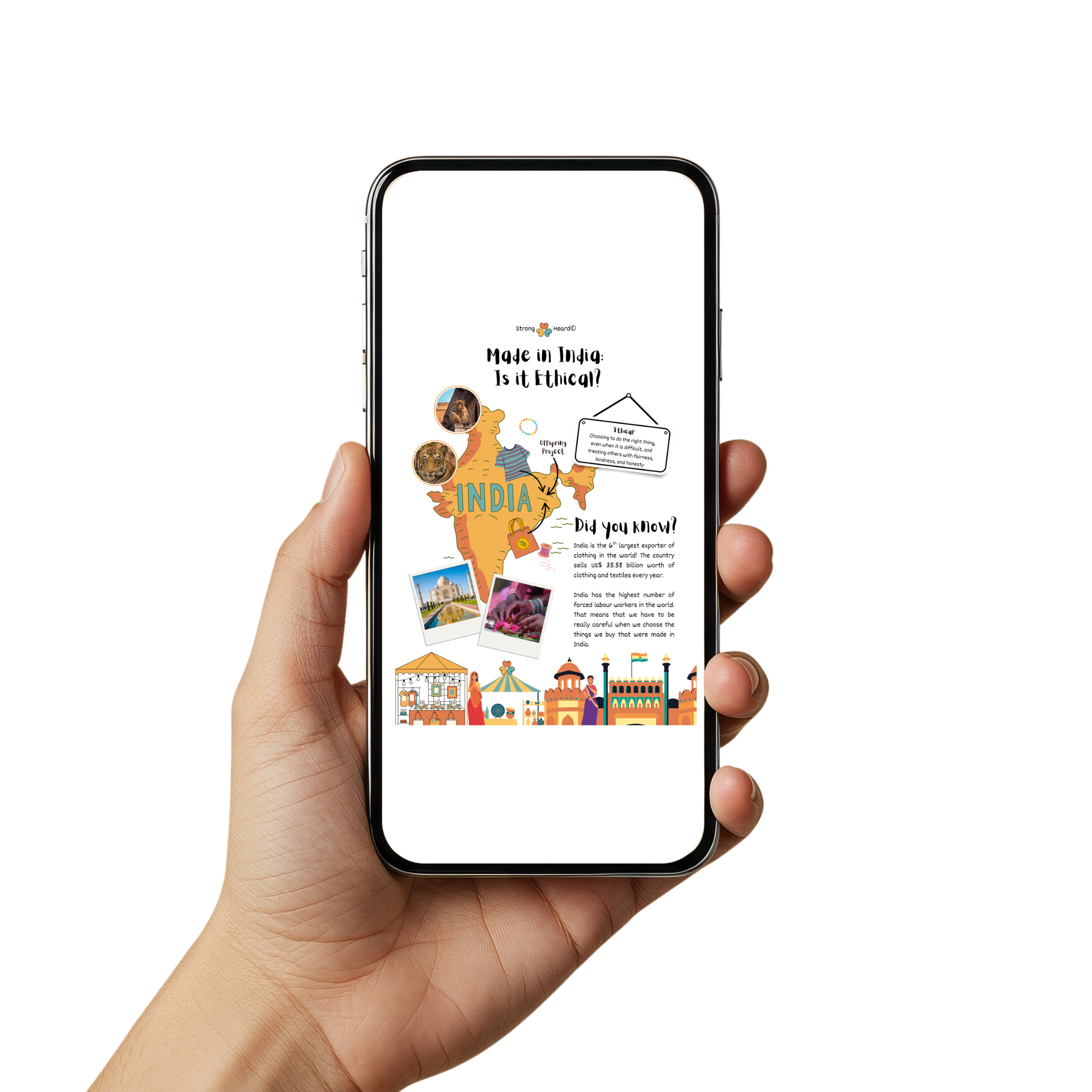 Image 2 of 2
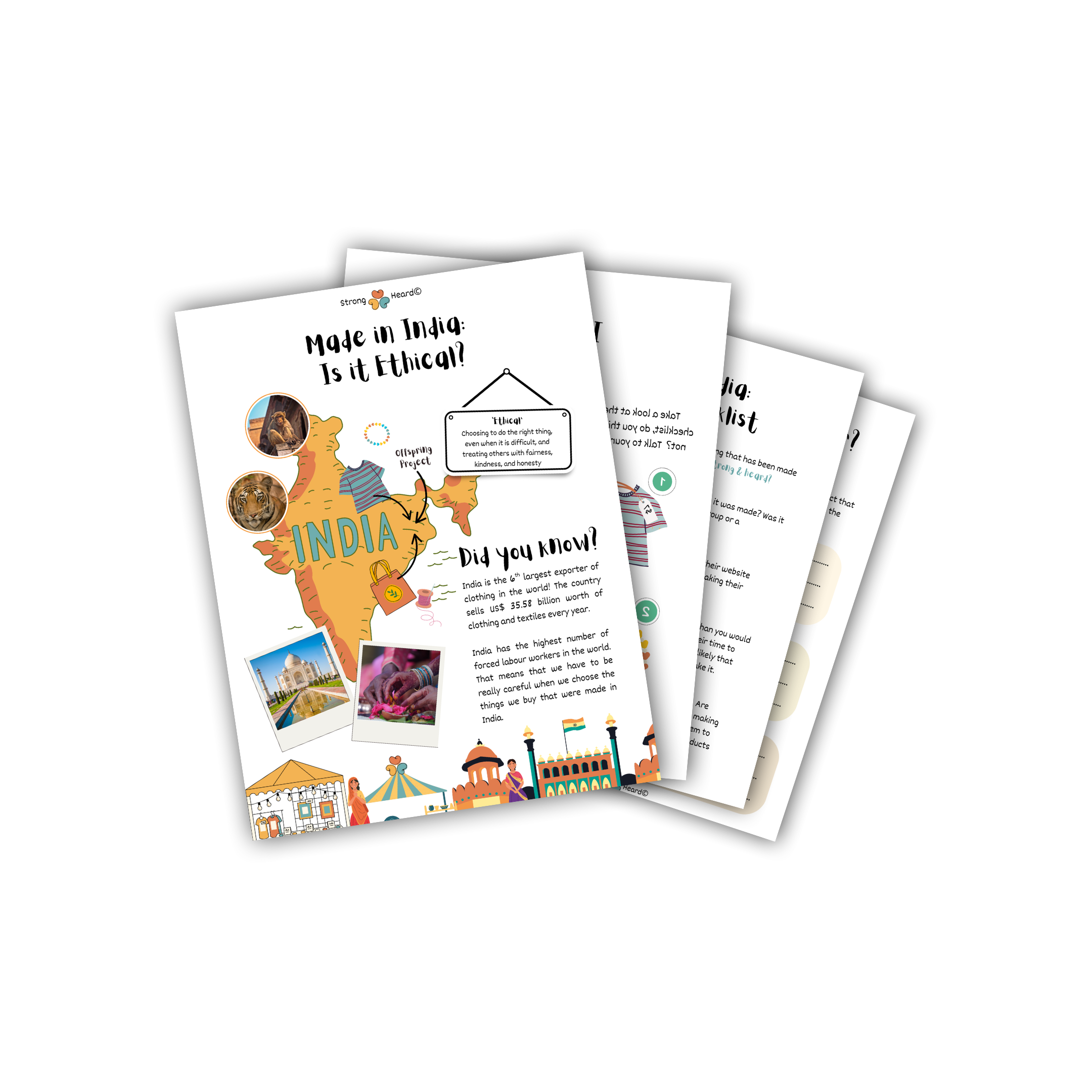
Help students think critically about global trade and ethical consumption with this engaging “Made in India: Is It Ethical?” activity for Grades 4–6.
This resource introduces students to real-world questions about where products come from, who makes them, and whether workers are treated fairly. Using an ethical checklist, students evaluate three different “Made in India” scenarios and decide whether the products appear fair or unfair based on price, transparency, working conditions, and labour practices.
Students explore:
What “ethical” means in a global trade context
How forced labour impacts workers
Why extremely cheap products can be a warning sign
How consumers can make responsible choices
Through discussion, partner work, and written reflection, students develop critical thinking skills while building awareness of fair trade, global citizenship, and ethical decision-making.
“Made in India: Is It Ethical?” information page
Ethical checklist worksheet
Scenario-based evaluation activity
Reflection questions
Printable student response sheets
Fair Trade lessons
Global trade and economics units
Social studies / humanities
Global citizenship learning
Ethical consumption discussions
Upper primary inquiry-based classrooms
This low-prep activity works well as a stand-alone lesson, discussion starter, or extension task within sustainability and global trade units.
Help students think critically about global trade and ethical consumption with this engaging “Made in India: Is It Ethical?” activity for Grades 4–6.
This resource introduces students to real-world questions about where products come from, who makes them, and whether workers are treated fairly. Using an ethical checklist, students evaluate three different “Made in India” scenarios and decide whether the products appear fair or unfair based on price, transparency, working conditions, and labour practices.
Students explore:
What “ethical” means in a global trade context
How forced labour impacts workers
Why extremely cheap products can be a warning sign
How consumers can make responsible choices
Through discussion, partner work, and written reflection, students develop critical thinking skills while building awareness of fair trade, global citizenship, and ethical decision-making.
“Made in India: Is It Ethical?” information page
Ethical checklist worksheet
Scenario-based evaluation activity
Reflection questions
Printable student response sheets
Fair Trade lessons
Global trade and economics units
Social studies / humanities
Global citizenship learning
Ethical consumption discussions
Upper primary inquiry-based classrooms
This low-prep activity works well as a stand-alone lesson, discussion starter, or extension task within sustainability and global trade units.